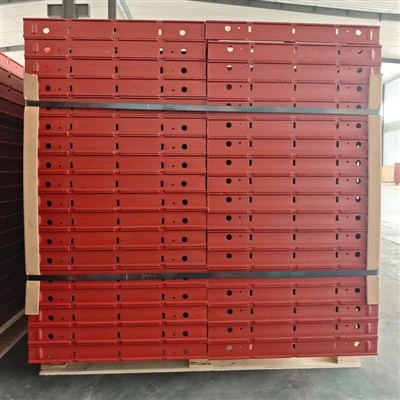
Aluminum alloy formwork is widely used in modern construction due to its lightweight, high strength, and reusability. However, maintaining its performance relies on scientific and regular maintenance and periodic management.The maintenance cycle refers to the time points for cleaning, inspection, repair, and protection based on the frequency of use, environmental conditions, and storage status of the formwork. This prevents premature aging and accidental damage, maintaining forming accuracy and construction efficiency.
During daily use, the maintenance cycle should be based on a single construction cycle. After each formwork removal, immediately remove any residual concrete slurry and debris from the surface. Use a soft scraper and clean water to rinse, avoiding scratching the oxide layer or coating with hard objects. If stubborn adhesion is found, use a special release agent to assist in cleaning; do not pry forcefully to avoid damaging the panel's flatness. After cleaning, check the panel surface for dents, deformation, or weld cracks. Small damage can be marked on-site and repaired during reusability intervals to prevent problems from accumulating.
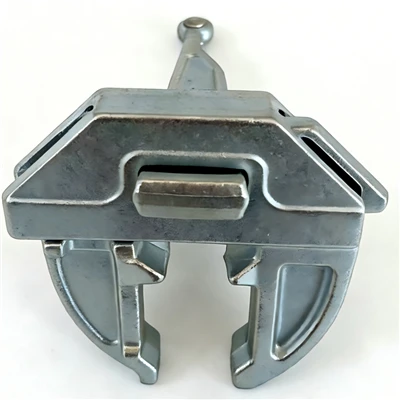
Weekly or batch maintenance is mostly for projects with concentrated use. If the same set of formwork is used continuously for the construction of multiple buildings, it is recommended to conduct a comprehensive inspection every five to ten floors completed or every seven to ten days. The inspection should focus on whether the connectors are loose, whether the locks and bolts are worn, and whether there are any signs of impact on the edges and corners. For formwork exposed to rain or damp environments, the integrity of the oxide film and protective paint should be checked. If blistering or peeling occurs, it should be recoated promptly to prevent corrosion of the substrate. Maintenance at this stage can be performed by the work team in conjunction with a dedicated equipment operator, and recorded to create a traceable maintenance file.
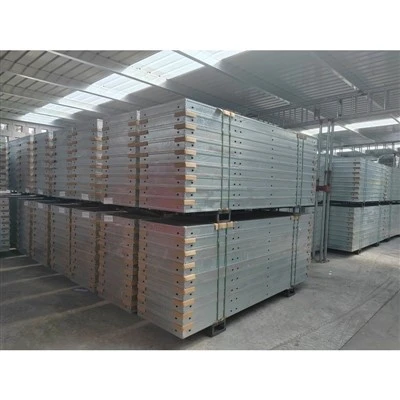
When the formwork is not in use for a long period or is transferred between projects, the maintenance cycle should be extended to monthly or even quarterly levels. Before storage, the formwork must be thoroughly cleaned and dried to prevent residual moisture from causing localized corrosion. The storage environment should be well-ventilated, protected from rain and direct sunlight, and ideally elevated off the ground and covered with a moisture-proof cloth to avoid direct contact with ground moisture. Every month, a certain percentage of the formwork should be randomly inspected to check for hidden deformation or concealed rust, and appropriate lubrication should be applied to moving parts to ensure smooth opening and closing. For storage spanning seasons or years, a new surface protective treatment should be applied to ensure the oxide layer or coating regains its protective properties.
Periodic maintenance should be adjusted flexibly based on environmental conditions. High temperature and humidity, or near-shore salt spray environments, accelerate the oxidation and surface deterioration of aluminum alloys. In such cases, the inspection frequency can be increased to once every three days, and the recoating cycle of the protective coating should be shortened. In dry, low-dust areas, the frequency can be relaxed somewhat, but minimum cleaning and inspection standards must still be maintained.
A scientifically sound maintenance cycle ensures that aluminum alloy formwork maintains good dimensional accuracy and surface condition even after multiple transfers. This reduces rework and replacement costs, preserves the material's lightweight advantage, and provides a solid guarantee for efficient construction.