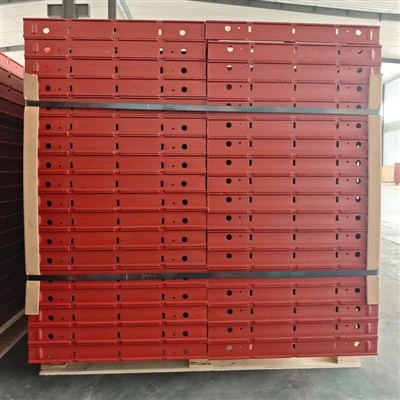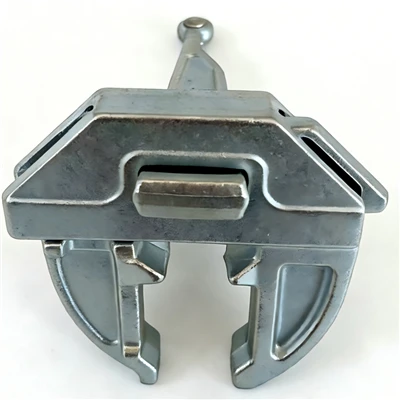
As a crucial temporary facility in building construction and maintenance, scaffolding's characteristics determine its applicability and irreplaceability in various engineering scenarios. Generally speaking, it possesses significant advantages such as modularity, high load-bearing capacity, versatility, safety, reliability, and reusability, making it play a central role in modern construction.
I. Modular Structure and Flexible Layout
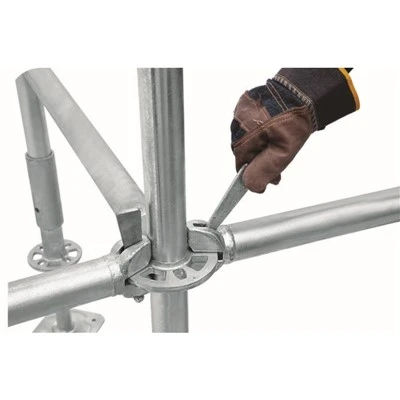
Scaffolding is mostly composed of standardized members and connectors, allowing for flexible assembly according to project scale, height, and shape. Coupler-type, cup-lock, and portal frame types can all adjust the spacing between uprights, step distance, and number of layers as needed, adapting to the operational requirements of planar, facade, and irregular structures. For example, during the construction of high-rise building facades, it can be erected in sections according to the facade outline, while in interior decoration, its dimensions can be reduced to form a lightweight scaffold (example data: commonly used coupler-type upright spacing is 1.0~1.5m, adjustable according to load). This modular nature allows scaffolding to respond quickly to different working conditions, shortening the erection and dismantling cycle.
II. High Load-Bearing Capacity and Uniform Distribution
High-quality scaffolding is designed with comprehensive consideration of the combined effects of construction personnel, tools, materials, and wind loads, possessing high strength and rigidity. Steel pipe scaffolding can withstand large concentrated and uniformly distributed loads, making it suitable for heavy-duty operations; cup-lock and portal scaffolding, due to their good node rigidity, offer excellent overall stability and effectively control deformation. Through the rational arrangement of uprights and horizontal bars, the load can be transferred layer by layer from the footboards to the foundation, avoiding instability caused by local overload.
III. Versatile Uses and Protective Functions
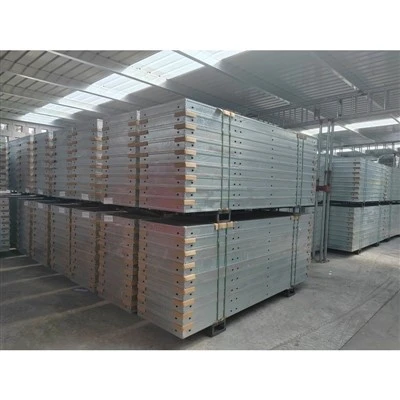
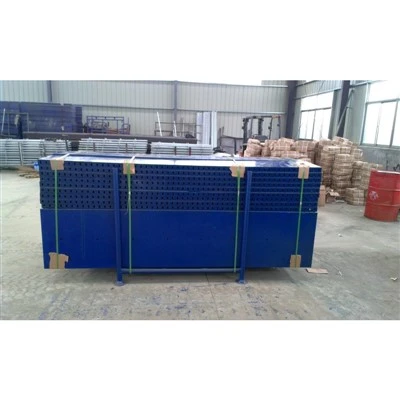
Scaffolding not only provides working platforms but also often serves as formwork support, exterior wall decoration workbenches, and equipment installation work surfaces. Its perimeter can be equipped with guardrails, toe boards, and safety nets to form a fall protection system, improving the safety of high-altitude operations. In the maintenance of bridges, towers, and other structures, specialized cantilevered or lifting scaffolding can complete maintenance tasks without affecting normal use.
IV. Safe, Reliable, and Reusable
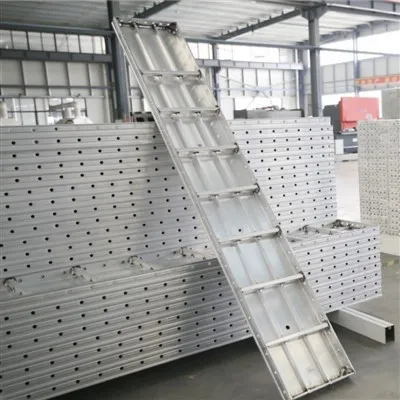
Modern scaffolding has undergone continuous improvements in materials and processes. Steel pipes are treated for rust prevention, aluminum alloys are corrosion-resistant, and joint designs are more precise, allowing for multiple assembly and disassembly without significantly weakening performance. Standardized erection and regular inspections minimize safety hazards. Its reusability also reduces resource waste, aligning with green construction principles.
V. Balance of Economy and Adaptability
While initial investment varies depending on the type, scaffolding offers good overall economic efficiency from the perspectives of shortened construction periods, labor savings, and reusability. Different materials and forms can be flexibly selected to suit different budgets and site conditions, balancing safety and cost.
In summary, scaffolding, with its core characteristics of being modular, high-load-bearing, multi-purpose, safe, and reusable, can meet complex construction needs while effectively controlling risks and costs, making it an indispensable basic equipment for engineering construction.