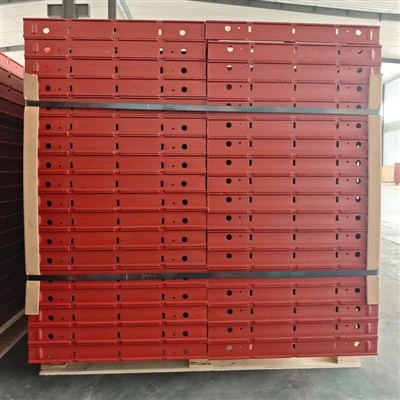
The implementation standards for aluminum alloy formwork are the fundamental basis for ensuring its safe, accurate, and efficient application in engineering projects. They integrate requirements from multiple aspects, including material performance, manufacturing processes, installation and acceptance, and maintenance, providing a unified technical standard for design, production, and construction. The current standard system takes into account national, industry, and local regulations, while also incorporating internal control indicators from established companies, forming constraints and guidelines covering the entire lifecycle.
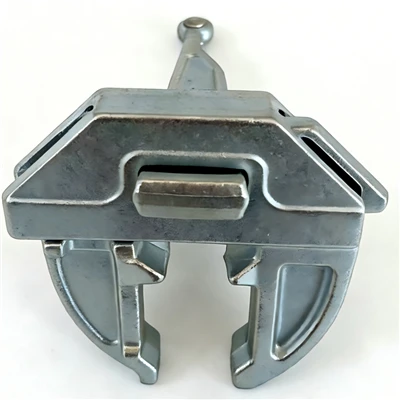
Material and component standards first establish a quality baseline. Aluminum alloy profiles must meet the chemical composition and mechanical property specifications of the corresponding grade. Commonly used 6-series alloys must meet design requirements in terms of tensile strength, yield strength, and elongation to ensure load-bearing capacity and resistance to deformation. The thickness and color uniformity of the oxide film on the sheet surface should be recorded, and the adhesion and weather resistance of the protective coating must meet the expected environmental conditions at the construction site. Connectors such as latches, bolts, and pins should meet mechanical performance standards to prevent assembly instability due to insufficient strength.
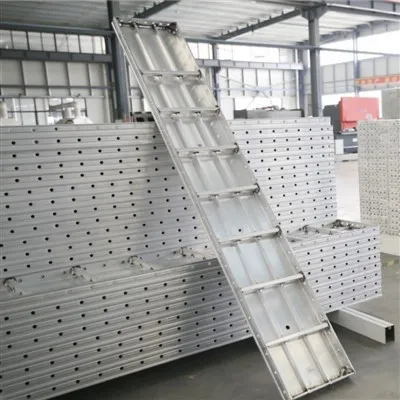
Manufacturing and processing standards emphasize precision and consistency. Template dimensional deviations, diagonal errors, and surface flatness must be within allowable ranges. Cuts and welds should be smooth and burr-free to avoid stress concentration and concrete appearance defects. The widespread adoption of CNC machining and mold forming significantly improves the interchangeability of batch products, reducing on-site adaptation difficulties. For irregularly shaped or oversized panels, trial assembly and dimensional verification should be completed in the factory to ensure a high success rate for on-site installation.
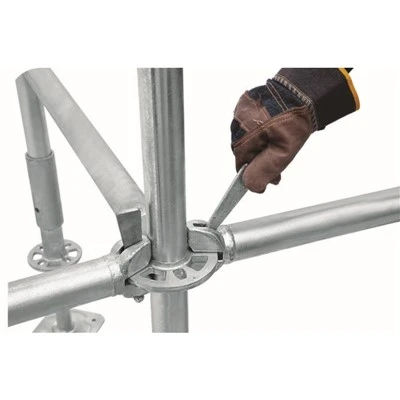
Installation and acceptance standards emphasize process control and reliable results. The support system must be consistent with the design calculations; the verticality of the uprights, step distance, and the arrangement of scissor braces should meet stability calculations. After assembly, the tightness of joints, panel elevation, and axial deviation should be checked, and a pre-load test should be conducted before concrete pouring to verify overall rigidity. During the demolding stage, the timing must be determined according to the curing strength under the same conditions; the demolding sequence and method must not damage the template body or connection system.
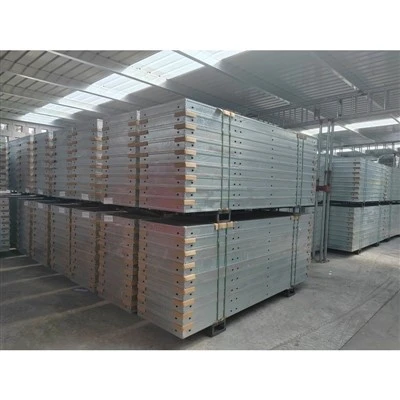
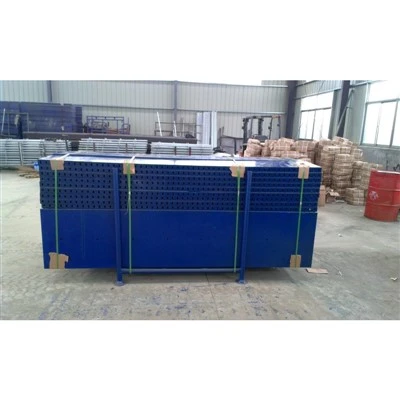
Inspection and maintenance standards ensure long-term performance. After each use, a visual inspection and dimensional re-measurement should be performed, recording deformation, cracks, and coating conditions. Components exceeding standards must be repaired or discarded. Cleaning should be done with a neutral agent and soft tools to prevent damage to the oxide protective film. The storage environment should be well-ventilated, moisture-proof, and impact-resistant. Protective coatings can be applied to critical areas to extend service life.
Following these technical specifications ensures that aluminum alloy formwork maintains stable mechanical performance and forming quality throughout its design life, while reducing rework and safety risks caused by missing standards, providing solid support for industrialized construction and high-quality construction.