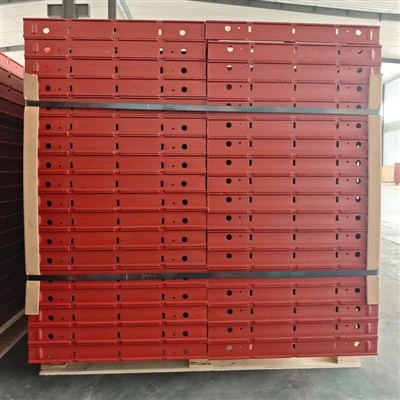
Formwork accessories are an indispensable component of the formwork system. Although smaller in size and material usage than the main formwork, they play a crucial role in ensuring stable connections, precise adjustments, and construction safety. Like the joints and links of the formwork, they organically connect the dispersed panels, supports, and walls, allowing the entire system to maintain its integrity and controllability under the loads of concrete pouring and environmental changes.
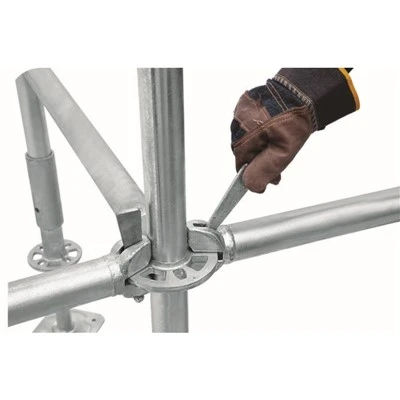
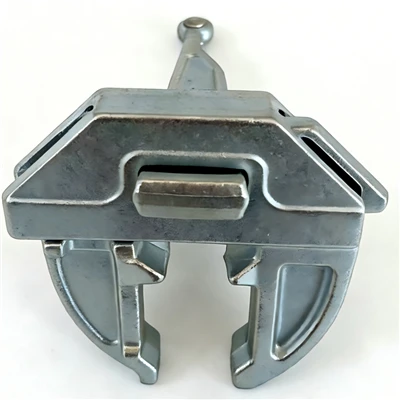
Functionally, formwork accessories mainly include connectors, fasteners, adjusters, and support auxiliary components. Connectors are used for rapid assembly and positioning between panels, commonly including locks, hooks, and slots, which simplify on-site operations while ensuring tight joints. Fasteners, primarily bolts, nuts, and pins, provide reliable mechanical clamping force between the formwork and supports, and between formwork panels, preventing displacement and opening during pouring. Adjusters include adjustable top supports, diagonal brace joints, and height fine-tuning devices, which can adapt to uneven foundations or structural dimensional deviations on site, ensuring the installation surface meets design elevation and level requirements. Supporting components include keel clamps, limiting blocks, and anti-floating anchors, helping to distribute the load and suppress the formwork's upward or lateral displacement under the action of concrete.
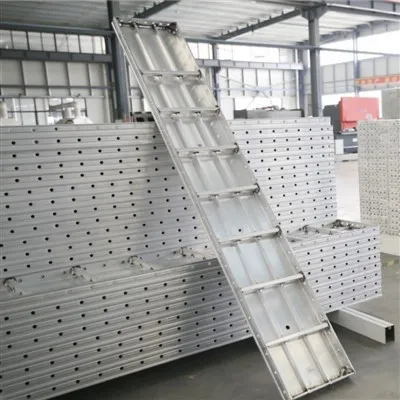
In terms of material selection, formwork accessories generally use steel or high-strength aluminum alloy. The former, with its excellent load-bearing and wear-resistant properties, is suitable for heavy-duty parts, while the latter, while maintaining strength, reduces weight, facilitating high-altitude handling and frequent turnover. Key load-bearing components must undergo heat treatment or surface anti-corrosion treatment to improve fatigue resistance and rust resistance, ensuring stable performance under repeated use and in different climatic environments.
In construction practice, the standardized and universal design of accessories significantly improves assembly efficiency. Workers can quickly identify and select appropriate accessories based on shape and interface characteristics, reducing the risk of incorrect or missing installations. Combined with formwork numbering and BIM model pre-visualization, the location and quantity of accessories can be accurately calculated before construction, avoiding on-site additions that affect progress. Their reliable operation also reduces quality defects such as formwork bulging and grout leakage caused by connection failures, indirectly ensuring the accuracy of concrete forming and structural safety.
Although formwork accessories are often regarded as accessories, they bear the important mission of ensuring system stability and smooth process flow. Understanding their functional characteristics and application significance helps in the rational configuration and use of formwork in project selection and on-site management, thereby allowing the formwork system to continue to perform its due function in the high-turnover, fast-paced modern construction.