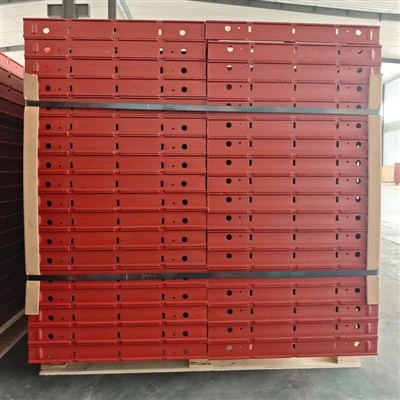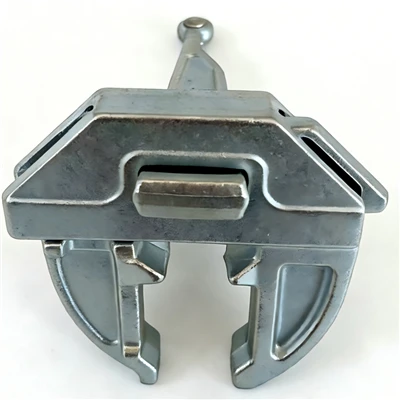
The production of steel formwork is the process of transforming design concepts into reusable and sturdy components. The process is interconnected, requiring reliable material properties and emphasizing the unity of forming precision and structural strength. The entire process roughly covers raw material inspection, blanking, forming and pressing, welding and assembly, surface treatment, and finished product inspection. Each step lays the foundation for the quality of the final product.
Production begins with strict control of raw materials. The selected steel plates must meet the strength and thickness design requirements, and the surface must be inspected for defects such as cracks, rust, or delamination. Only qualified plates can proceed to the next process. Based on the formwork model and specifications, technicians will rationally cut the plates according to the layout drawing to reduce waste. CNC cutting or plasma cutting equipment is used to cut the plates to the preset dimensions, requiring clean cuts and precise dimensions to provide a good starting point for subsequent forming.
After blanking, the forming stage begins. A press and molds are used to press and shape the steel plates, forming the required concave and convex contours and edge bending. This step determines the geometry and load-bearing framework of the formwork. For panels with stiffening ribs or special curved surfaces, multiple positioning stampings are required to ensure consistent curvature and angles. Pressure and temperature must be controlled during the forming process to avoid excessive deformation affecting material properties or causing springback deviations.
Next comes welding and assembly. The formed panels are positioned with the steel frame and stiffening ribs according to design nodes and connected using CO2 gas shielded welding or electric arc welding. Welding must ensure full welds, free of slag inclusions and porosity, and necessary stress relief treatment is performed post-weld to prevent localized deformation from affecting overall flatness. The welding quality of critical load-bearing parts is particularly important and is often ensured through non-destructive testing and random checks.
After welding, surface treatment begins. Mechanical rust removal or sandblasting is performed to remove oxide scale and welding slag, followed by the application of an anti-rust primer. Some products are also coated with a wear-resistant or corrosion-resistant topcoat to extend service life in humid or corrosive environments. The surface coating must be uniform and have strong adhesion to prevent peeling and contamination of the concrete surface during construction.
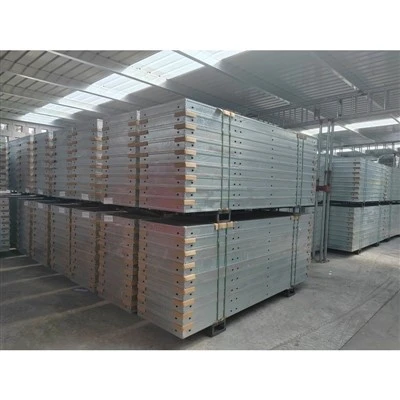
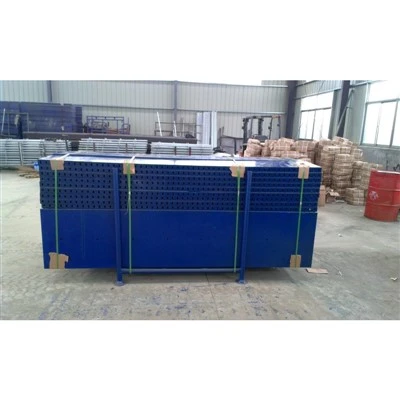
The final step is finished product inspection and numbering. The inspection includes checking dimensions, flatness, weld quality, and coating integrity. Qualified products are numbered according to specifications and project requirements and stored in the warehouse for rapid transportation and on-site assembly. Some manufacturers also conduct simulated load tests to verify the stability of the formwork under concrete lateral pressure.
This standardized process ensures controllable quality of steel formwork from materials to finished product, enabling it to maintain high precision and durability during construction and providing solid support for the formation of concrete structures.