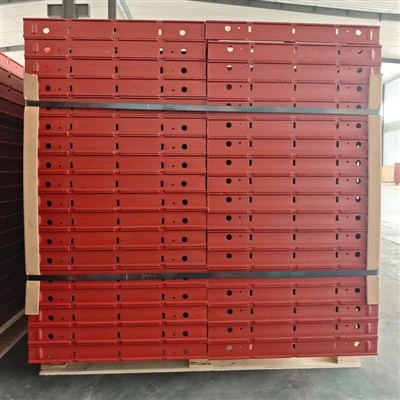
The quality of steel formwork directly affects the forming accuracy and construction safety of concrete structures. Quality control must be integrated throughout the entire process of design, production, inspection, and use. A closed loop must be formed across materials, processes, testing, and management to ensure the product remains stable and reliable during use.
Source control begins with material selection and incoming inspection. The main materials of steel formwork are mostly low-alloy high-strength steel plates and sections, which must meet the grade, thickness, and mechanical performance requirements specified in national or industry standards. Upon arrival at the factory, material certificates and chemical composition reports must be verified, and the plates must be visually inspected to remove materials with cracks, delamination, severe corrosion, or excessive thickness deviations. Only qualified raw materials can provide a stable performance foundation for subsequent processing.
Quality control during the production process focuses on processing accuracy and welding quality. CNC or plasma cutting equipment should be used during the material cutting stage to ensure that dimensional errors are within allowable limits and that cuts are neat and burr-free to avoid gaps or stress concentrations during splicing. The forming and pressing process must be operated according to the mold parameters, controlling pressure and time to ensure the curvature and bending angle of the panels conform to the design, preventing shape deviations due to springback. Welding must ensure continuous, full welds free of slag inclusions and porosity. Appropriate welding processes should be used for critical load-bearing areas, and non-destructive testing should be performed on random sampling to avoid weakening the overall rigidity due to welding defects.
Surface treatment quality directly affects the durability of the steel formwork and the appearance of the concrete. Rust removal must be thorough, commonly using sandblasting or mechanical grinding to remove oxide scale and welding slag, ensuring the substrate is clean. The anti-rust primer should be applied evenly and bonded firmly to the substrate. The topcoat must possess weather resistance, wear resistance, and corrosion resistance to prevent premature failure in humid or chemical environments. Coating thickness and adhesion should meet technical requirements to prevent peeling and contamination of the concrete surface during construction.
Before leaving the factory, the finished product must undergo comprehensive inspection, including dimensions, flatness, diagonal error, weld quality, and coating integrity. Inspection should be carried out according to standards or contractual agreements. Load tests should be conducted when necessary to simulate concrete lateral pressure and verify the deformation and stability of the formwork. Qualified products should be numbered, registered, and marked with usage precautions for traceability and on-site management.
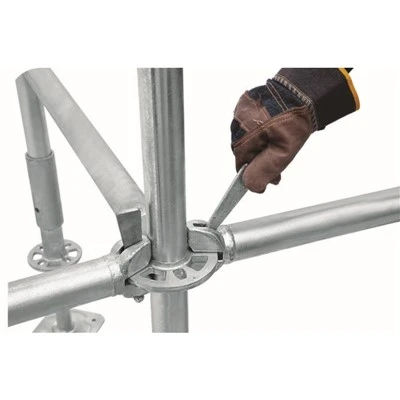
Quality control during the usage phase is equally crucial. On-site assembly checks should be conducted according to regulations to ensure tight connections and stable supports, preventing deformation or instability caused by improper installation. After use, residual concrete should be cleaned promptly, and the coating and welds inspected. Any damage should be repaired or the formwork discarded immediately to maintain its reusability.
Therefore, quality control of steel formwork is a systematic project requiring the implementation of standards and testing across the entire chain of materials, processing, protection, and use to provide a high-precision, high-durability, and reliable guarantee for concrete structure construction.