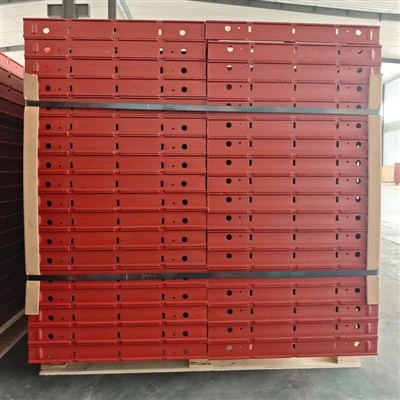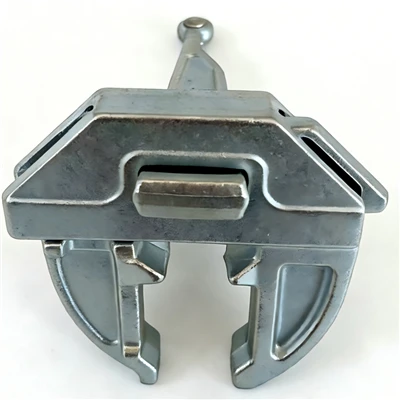
The key to the high strength and durability of steel formwork during construction lies in the rational selection and performance matching of its materials. Different projects have varying requirements for the load, precision, and environmental adaptability of formwork, and the type of material directly affects the service life and construction performance of the formwork. Understanding the characteristics of the main materials helps to select materials appropriately and economically.
Currently, carbon structural steel is the most widely used, with common grades being Q235 and Q345. Q235 has a moderate carbon content, good plasticity, and strong weldability. Under normal temperature conditions, it can meet the strength requirements of most building formwork, and its processing and maintenance are relatively convenient. Therefore, it is widely used in ordinary building construction, bridge piers, and other projects. Q345 is a low-alloy high-strength steel with a significantly higher yield strength than Q235. It performs more stably in structures subjected to large lateral pressures or with large spans, and is particularly suitable for the formwork of core tubes or heavy-duty beams and slabs in high-rise buildings.
In applications with higher requirements for corrosion resistance, weathering steel or stainless steel are selected. Weathering steel forms a dense oxide film in natural environments, slowing down the corrosion process. It is suitable for use in coastal areas, chemical industrial parks, or rainy regions. Although the initial investment is slightly higher, it significantly extends the maintenance-free period. Stainless steel formwork has even better corrosion resistance and is often used in special cleanrooms or permanently exposed decorative concrete components; however, it is more expensive and more difficult to process than ordinary carbon steel.
Some special-purpose formwork also uses steel that has undergone tempering or surface treatment. For example, hot-dip galvanizing forms a zinc layer on the surface, or powder coating or electrophoretic coating is applied before leaving the factory to improve rust resistance and wear resistance. For formwork used in cold regions, steel with good low-temperature toughness is sometimes selected to avoid brittle fracture at low temperatures.
Besides material, the thickness and cross-sectional shape of the plates also affect performance. Thicker panels can better resist the impact and lateral pressure during concrete pouring, but the weight increases accordingly; lightweight hollow sections can reduce the burden of handling while ensuring rigidity, facilitating work at heights or in confined spaces. Reasonable welding processes and anti-deformation measures during fabrication can also fully release the material's advantages during construction.
In general, the main materials used in steel formwork revolve around carbon structural steel, low-alloy high-strength steel, and corrosion-resistant steel. Combined with appropriate surface treatment and structural design, they can meet diverse needs ranging from ordinary building construction to harsh environments. Selecting suitable materials based on project conditions ensures construction quality and helps control overall costs, allowing steel formwork to play a durable and reliable role in construction.