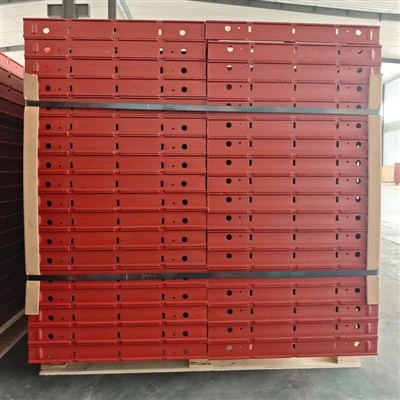
The forming process of steel formwork is the process of transforming raw steel plates into high-precision molds that meet construction requirements. It encompasses material preparation, processing and shaping, connection and assembly, and surface treatment. This process determines the dimensional stability, structural strength, and service life of the formwork, and directly affects the flatness and appearance quality of the concrete.
The process begins with material inspection and cutting. The selected steel plates must first have their grade and thickness verified to ensure their mechanical properties meet standards. Then, surface quality is checked, and areas with obvious scratches or severe corrosion are removed. Based on the design dimensions, precise cutting is performed using CNC plasma or flame cutting equipment. The cuts must be flat and free of significant heat-affected zone deformation, providing a good foundation for subsequent forming. For complex curves or irregularly shaped parts, laser cutting can be used to improve contour accuracy.
The forming stage mainly achieves the preset geometric shape through cold bending or hot pressing. Cold bending is suitable for most flat and straight-edge components. It involves gradually pressing the material at a set angle on a bending machine, maintaining the original strength of the material and avoiding performance changes caused by heat. For areas with large curvature or high stress requirements, a hot-pressing process is used. The steel plate is heated to a suitable temperature and pressed into a mold, then cooled to obtain a stable curved shape. This process requires careful control of the temperature and pressure curves to prevent excessive springback or cracking.
Welding of the stiffening plates and frame is a crucial step in enhancing rigidity. The inner ribs, outer frame, and panel are positioned according to the design, and fixed using a combination of continuous and intermittent welds. Attention is paid to the welding sequence to minimize deformation. Low-hydrogen welding rods are commonly used in critical load-bearing areas, and the base material is preheated to reduce weld brittleness and the risk of cracking. After welding, the welds undergo visual inspection, supplemented by ultrasonic or magnetic particle testing if necessary, to ensure no internal defects.
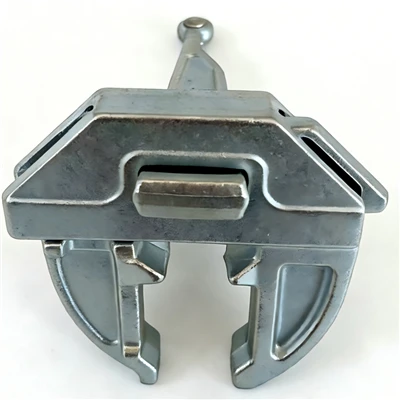
Precision and interchangeability are emphasized in the connection and assembly. Each unit is trial-assembled on a dedicated platform to correct joint gaps and hole position deviations, ensuring smooth on-site installation. Pins, bolts, and clamps must maintain flexible movement and reliable tightness to prevent grout leakage or displacement during pouring due to assembly errors.
Surface treatment imparts durability and demolding performance to the formwork. First, remove welding slag and oil stains, then perform sandblasting or shot blasting to remove rust. Following this, apply an anti-rust primer and topcoat, or, under specific conditions, hot-dip galvanize. To improve release, a special release agent can be evenly applied to the panel to form a stable film, reducing concrete adhesion.
The entire forming process combines the orderly processing of raw materials with strict quality control, giving the steel formwork high precision, high rigidity, and good weather resistance, thus providing a consistently reliable forming guarantee during construction.