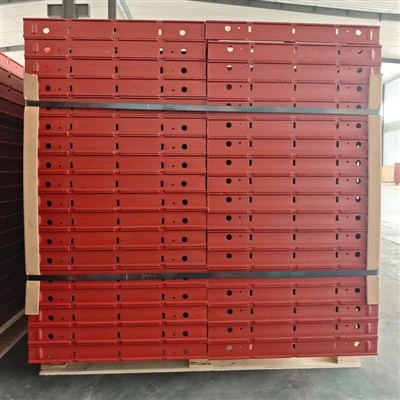
In the construction industry, steel formwork has become an important choice for many engineering scenarios due to its advantages such as high strength, good stability, and reusability. Its applicable environment is influenced by both material properties and construction conditions and structural requirements; proper matching is essential to fully realize its advantages.
Steel formwork is suitable for projects with high load requirements or strict requirements for concrete forming precision. For example, the core tubes of high-rise buildings, bridge piers and beams. These structures have strict standards for the rigidity and load-bearing capacity of the formwork. Ordinary wooden formwork or bamboo plywood is prone to deformation under stress, affecting its appearance and dimensions. Steel formwork, supported by a metal frame, can maintain shape stability under greater lateral pressure and vibration impact, reducing repairs and rework.
In projects with high frequency of reuse, the environmental adaptability of steel formwork is even more prominent. Large-scale infrastructure or standardized residential complex construction often requires the repeated erection of the same batch of formwork in different buildings and sections. Steel formwork is wear-resistant and corrosion-resistant, and after cleaning and maintenance, it can be reused dozens of times or even more, resulting in a significant long-term cost-reduction advantage. Especially in projects with tight schedules and fast turnaround times, it reduces waiting time for new formwork and facilitates smoother workflow.
Climate and environmental conditions are also factors to consider. Steel formwork surfaces can be treated for rust prevention, maintaining good condition even in humid or rainy areas. In cold regions, it can withstand changes in the heat of hydration of concrete at low temperatures, making it less prone to cracking due to temperature differences. However, in highly corrosive environments such as near the sea or chemical industrial parks, additional protective coatings or the use of corrosion-resistant steel are necessary; otherwise, long-term exposure will reduce its service life.
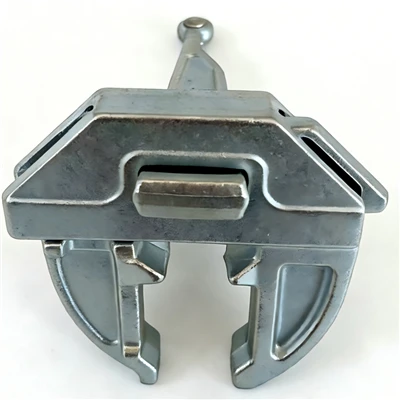
Steel formwork can also enable precise construction in areas with limited space or complex shapes. Through customized panels and connectors, assembly can be completed within a limited working area, ensuring tight joints in curved beams, irregularly shaped columns, etc., resulting in a smooth and uniform concrete surface. This is particularly important for public buildings or landmark projects where aesthetic quality is paramount.
Overall, steel formwork is suitable for environments with high loads, high precision, high frequency of turnover, and diverse climates and shape requirements. As long as the selection and maintenance are done well in combination with the characteristics of the project, it can improve construction efficiency and economy while ensuring quality, making it one of the reliable tools in modern construction.