Scaffolding is a temporary support structure that provides a safe working platform for high-altitude operations such as construction, maintenance, and decoration. Its proper selection and erection directly affect construction efficiency and personnel safety. It not only supports workers, tools, and materials but also serves as a working surface for formwork support, exterior wall decoration, and equipment installation, making it an indispensable infrastructure in modern engineering construction.
I. Main Types and Structural Characteristics
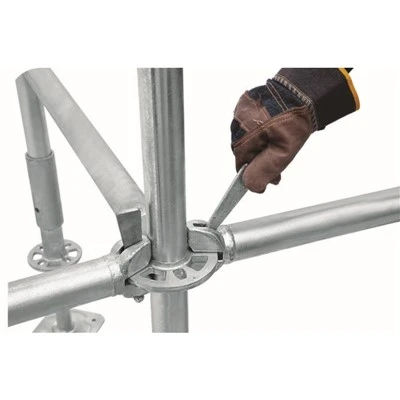
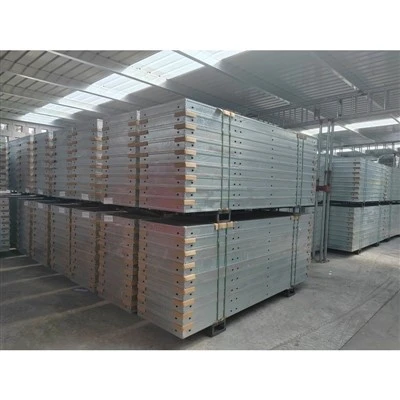
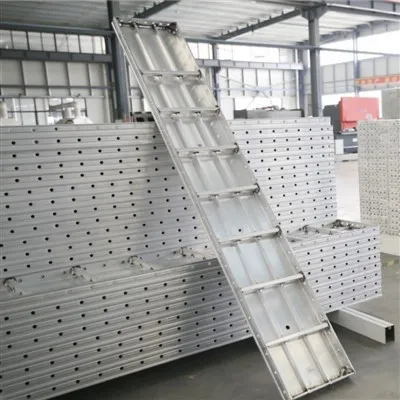
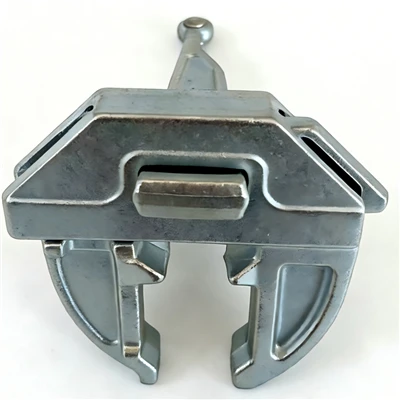
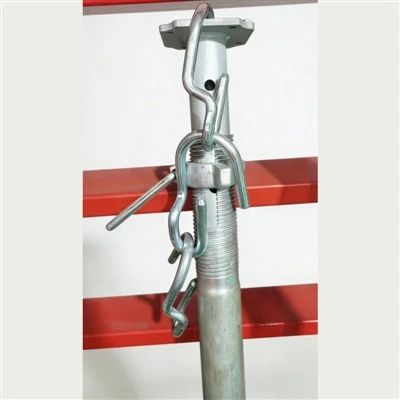
Scaffolding can be classified by material into steel pipe scaffolding, cup-lock scaffolding, frame scaffolding, aluminum alloy scaffolding, and wooden scaffolding. Steel pipe scaffolding, connected by steel pipes and couplers, has strong load-bearing capacity and a wide range of applications, commonly used in the main construction of high-rise buildings. Cup-lock and frame scaffolding use standardized nodes, allowing for quick assembly and good overall stability, suitable for large-area flat work. Aluminum alloy scaffolding is lightweight, corrosion-resistant, and easy to move and disassemble, often used for interior decoration and exterior wall cleaning. Wooden scaffolding, due to its limited load-bearing capacity and durability, is now rarely used. Scaffolding can be categorized by its erection method into ground-mounted, cantilevered, and attached lifting types to adapt to different heights and site conditions.
II. Core Functions and Safety Requirements
The primary function of scaffolding is to provide a stable working platform. It must meet design requirements for strength, rigidity, and stability, and be able to withstand the combined effects of construction personnel, materials, and wind loads (Example data: the spacing between uprights of conventional steel pipe scaffolding should not exceed 1.5m, and the step distance should not exceed 1.8m). Erection must follow a specific plan, including the installation of scissor bracing, wall ties, and anti-slip footboards. Regular checks should be conducted on member deformation, loose fasteners, and foundation settlement. For high-altitude operations, guardrails, toe boards, and safety nets should be provided to prevent personnel and objects from falling.
III. Selection and Layout Principles
The selection of scaffolding should be based on the project height, load requirements, construction period, and site conditions. For high-rise or heavy-load construction, steel pipe or cup-lock scaffolding is recommended to ensure overall rigidity; for space-constrained or frequently relocated structures, lightweight aluminum alloy scaffolding can be selected; for irregularly shaped structures, cantilevered or attached lifting types can be used to reduce ground occupation. When arranging scaffolding, it is necessary to consider unobstructed passageways, reasonable material stacking, and coordination with the locations of tower cranes, construction elevators, etc., to avoid cross-interference.
IV. Development Trends and Green Concepts
Modern scaffolding is trending towards modularity, lightweighting, and intelligence. Some products integrate sensors to monitor loads and displacements in real time, improving safety early warning capabilities. Simultaneously, the promotion of reusable metal scaffolding reduces timber consumption and construction waste, aligning with green construction requirements.
Overall, scaffolding is not only an important carrier for construction but also a key facility for safety assurance. A scientific understanding of its types, functions, and management points helps improve project efficiency and operational safety.