The erection and use of scaffolding is a systematic approach that integrates structural safety, process sequence, and on-site management. Its core lies in ensuring the stability and reliability of the scaffolding and the safety and convenience of the working surface through orderly steps and standardized operations. Before implementation, it is essential to fully understand the project's height, load, site conditions, and schedule requirements. Based on this, appropriate scaffolding type and materials should be selected, and preparations should be made according to design drawings and specific plans. On-site surveying of the foundation bearing capacity and surrounding environment, clearing debris, and setting up drainage measures are the primary steps to ensure a solid foundation for the scaffolding.
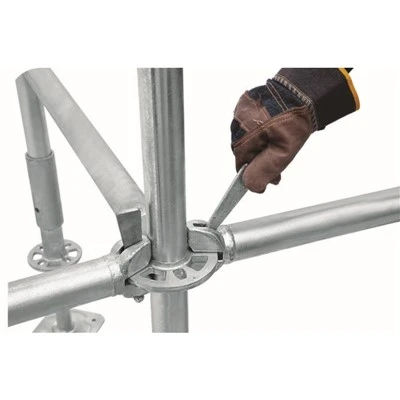
During the erection phase, a baseline should be established first. The planar position and verticality of the uprights should be marked using measuring instruments to ensure the initial scaffolding is horizontally and vertically aligned. Then, uprights and bottom horizontal bars should be installed sequentially, extending upwards layer by layer. Within the specified step distance, horizontal and diagonal bars should be added to form a stable triangular support. This cross-bracing method effectively distributes the load and suppresses lateral deformation. The tightness of each connector must be checked individually. Fasteners should be tightened to the appropriate torque, and the pins at the joints of the cup-lock joints must be properly engaged. For portal frame splices, the holes must be aligned and bolts locked in place, ensuring the joints are both secure and provide the necessary rotational or restraining performance. Where the scaffold crosses openings, corners, or areas of varying heights, additional wall ties or outriggers should be installed to reliably connect the scaffold to the building structure and prevent overturning.
The implementation of protective measures is also a crucial component of the erection method. Scaffold boards should be fully laid and securely fixed at the working level. Continuous guardrails and toe boards should be installed on the outer side, and dense safety netting should be hung to form a closed barrier, providing protection against falls and falling objects for workers at height. During use, the scaffold should be inspected daily, paying attention to whether the members are deformed, rusted, or loose, whether the joints are intact, and whether the foundation has settled or accumulated water. If any abnormalities are found, the scaffold should be immediately taken out of service and rectified. In case of severe weather such as strong winds or heavy rain, the upper cantilevered sections should be reinforced in advance or temporarily removed to prevent instability caused by external forces.
The dismantling method must be the reverse of the erection method. First, clear materials and personnel from the work surface, then remove the scaffolding layer by layer from top to bottom. Simultaneous dismantling from top to bottom or pushing down an entire section is strictly prohibited. Dismantled scaffolding components and accessories should be categorized and stacked for easy transportation and reuse. Throughout the process, the core of the method revolves around a steady and methodical approach, verifying each step to ensure that every step conforms to mechanical logic and construction specifications, thereby maximizing the effectiveness of the scaffolding while ensuring safety.