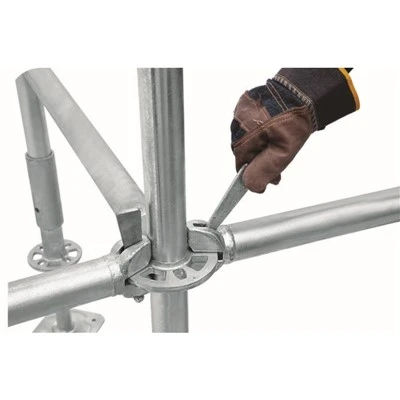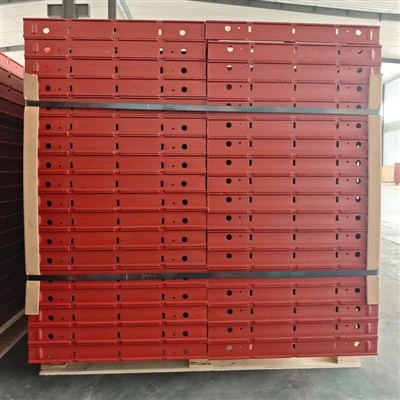
The scope of scaffolding refers not only to the spatial scale of its erection but also encompasses applicable industries, engineering types, and usage scenarios. As a support platform for high-altitude operations, it has formed a stable and irreplaceable working foundation in numerous scenarios.
I. Classification by Engineering Field
In the construction industry, scaffolding is widely used in the construction of building main structures, exterior wall decoration, roof waterproofing, and the installation of large equipment, covering everything from low-rise residential buildings to super high-rise buildings. In bridge engineering, it is used for the pouring and maintenance of bridge piers and beams, often employing cantilever or spanning scaffolding to address river and traffic restrictions. In municipal engineering, it serves for road sign installation, street light maintenance, pipeline laying, and tunnel lining. In the industrial sector, specialized scaffolding is also used for petrochemical plant maintenance, power facility maintenance, ship section construction, and aircraft fuselage assembly. The commonality among these fields is the need for safe and stable manual labor at heights.
II. Classification by Usage Scenarios
Ground-mounted scaffolding is erected from the ground and is suitable for projects with open spaces and solid foundations, such as the exterior facade construction of new factory buildings.
Cantilevered scaffolding extends outwards through the structure, solving limitations in areas such as street-facing locations, deep foundation pits, or areas where ground contact is not possible (example data: common cantilever length 1.5~2.0m, anchor points need to be structurally verified).
Attached lifting scaffolding is fixed to the building and automatically adjusts its height as the building rises; it is mainly used for continuous work on the exterior walls of high-rise residential and office buildings.
Mobile scaffolding has wheels at the bottom and is suitable for interior decoration, electromechanical pipeline installation, and short-distance relocation in confined spaces.
III. Classification by Height and Span
Ordinary coupler-type or cup-lock scaffolding can cover heights of tens of meters and, with proper reinforcement, can be used for buildings up to 100 meters high; frame scaffolding is mostly used for low-rise or indoor work below 10 meters. In the construction of large-span stadiums, lattice or truss-type scaffolding can be used to span tens of meters of space, creating a column-free working surface.
IV. Classification by Environment and Special Needs
In humid or corrosive environments, aluminum alloy or stainless steel scaffolding can be used; fire-retardant coated steel pipe scaffolding is required in high-temperature workshops or open flame work areas; custom-made irregular combination scaffolding can be used in narrow passages or areas with dense equipment to avoid obstacles.
Overall, scaffolding covers multiple fields such as construction, bridges, municipal works, and industry, involving different heights, spans, environmental conditions, and functional requirements. Its flexibility enables various high-altitude operations to be carried out safely, making it an important support means for modern engineering construction and maintenance.