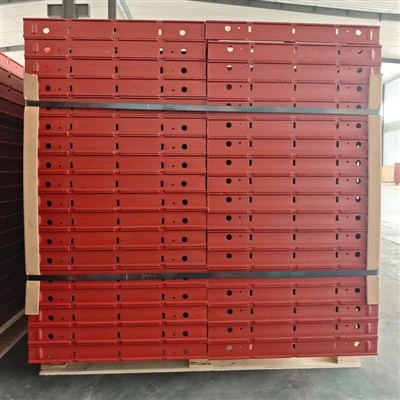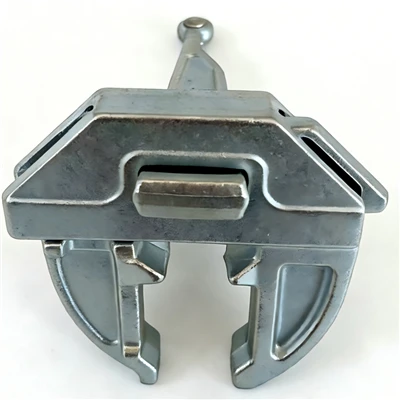
The design of steel formwork is not merely a simple structural fabrication, but a systematic consideration centered on construction needs, material properties, and performance efficiency. Its core concept lies in achieving a balance between strength and precision, versatility and adaptability, and economy and durability, making the formwork not only a tool for forming concrete but also a crucial carrier for improving construction efficiency and quality.
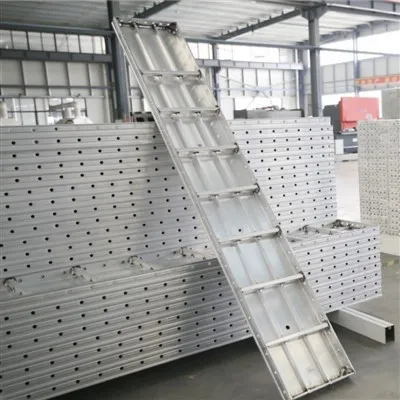
The design prioritizes load-bearing capacity and stability. Significant lateral pressures are generated during concrete pouring, especially in walls, columns, deep beams, or large-volume structures. Therefore, the formwork must possess sufficient rigidity and strength to resist deformation and instability. During the design phase, calculations based on material mechanics are used to determine the thickness of the steel plates, the cross-section of the frame steel sections, and the arrangement of stiffening ribs to ensure balanced stress distribution. This avoids localized overload leading to indentation and reduces unnecessary material redundancy, achieving a balance between lightweight and high performance.
Precision control is another core pursuit. Modern building and bridge engineering demands increasingly higher requirements for the dimensions and appearance of concrete molding. Formwork design must establish strict standards between manufacturing tolerances and assembly errors. Through modular dimensional planning and standardized interface design, different panels can be quickly assembled on-site with tight joints, ensuring a smooth surface and straight lines. For curved or irregularly shaped structures, 3D modeling and simulation analysis are performed in advance to ensure geometric consistency during processing and assembly, reducing the need for later modifications.
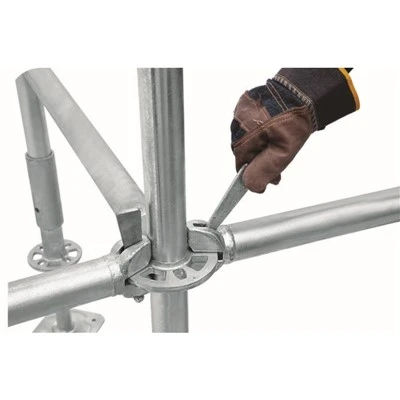
The concept of versatility and adaptability ensures the high efficiency of steel formwork in various scenarios. The design emphasizes modularity and serialization, allowing the same set of formwork to adapt to different cross-sections or spans by replacing a few panels, reducing the proportion of project-specific customization. For different working conditions such as bridge segments, precast components, or high-rise buildings, the design includes adjustable supports and connection structures to enhance reusability across projects, thereby reducing the cost per unit.
Economy and durability are balanced throughout the entire lifecycle. The design not only focuses on initial manufacturing costs but also assesses the number of times it can be reused, ease of maintenance, and residual value. Material selection prioritizes cost-effective steel while meeting strength and corrosion resistance requirements, and vulnerable details are reduced in joint construction to extend service life. The detachable and easy-to-clean structural design reduces on-site maintenance workload and rework probability, indirectly improving construction efficiency.
Furthermore, green construction concepts are gradually being integrated into design thinking. By reducing material waste, optimizing transportation volume, and incorporating recyclable structural forms, steel formwork becomes more aligned with sustainable development requirements throughout the entire industry chain.
In summary, the design philosophy of steel formwork prioritizes mechanical reliability, utilizes precision and versatility, and aims for economic durability. It integrates functionality, efficiency, and environmental protection, ensuring its continued stable, precise, and efficient support role in modern concrete construction.