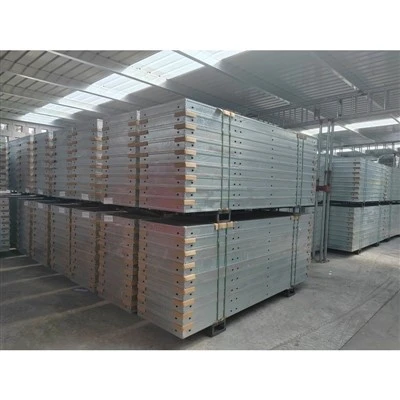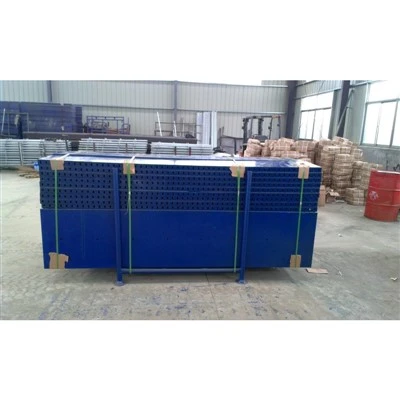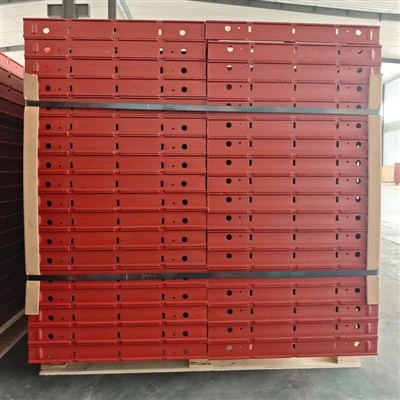
Steel formwork serves as a reliable forming mold in concrete construction because it combines a rigid frame with sealed panels. Through mechanical constraints and shape limitations, it allows liquid concrete to achieve the desired contour and dimensions during the hardening process. Its working principle can be understood from three aspects: load-bearing constraints, shape transfer, and coordinated construction.
Regarding load-bearing constraints, steel formwork, thanks to the high strength and good rigidity of steel, can resist lateral pressure and impact loads during concrete pouring. As concrete transforms from a fluid to a solid state, it generates expansion forces and bleeding pressure. The formwork must evenly transfer these forces to the support system to prevent bulging, deformation, or instability. Through reasonable panel thickness, rib arrangement, and edge reinforcement, the formwork distributes concentrated loads to the overall structure, keeping the formed surface flat and dense.
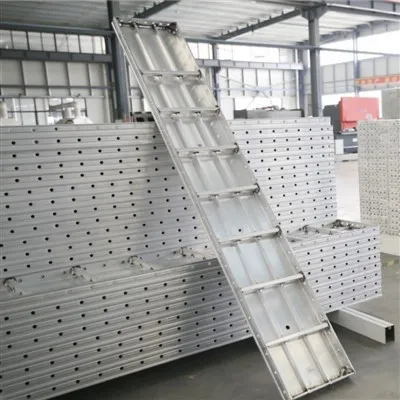
Shape transfer is the core function of steel formwork. Based on pre-processed geometric contours, it accurately replicates the dimensions and lines from the design drawings onto the concrete surface. The smoothness of the inner wall of the formwork and the tightness of the joints determine the surface quality of the concrete. Any minor unevenness or gap will be replicated as a defect after pouring. Therefore, during formwork assembly, it is essential to ensure that each unit is aligned, securely connected, and the surface is undamaged to allow the concrete to solidify and take shape along the designated path.
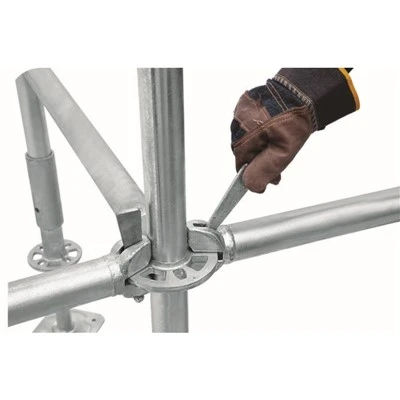
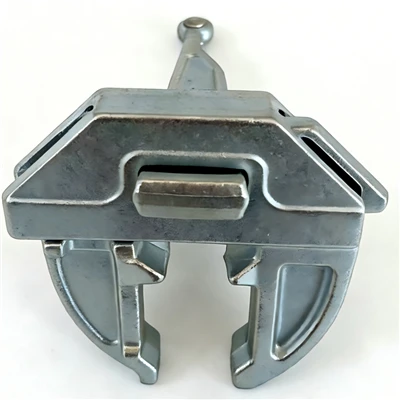
Collaborative construction reflects the coordination mechanism between the formwork and the construction process. During formwork erection, the formwork, supports, tie rods, and adjustment devices together form a stable system that restricts concrete displacement while allowing necessary ventilation and drainage channels to prevent internal voids. During pouring, the formwork must maintain its position and shape to allow the concrete to rise evenly in a controlled environment. During demolding, the formwork must be safely unloaded after the concrete has reached the required strength, removing the formwork without damaging the formed concrete structure.
Temperature and environmental changes also affect the implementation of the working principle. Steel conducts heat quickly, and differences in expansion and contraction may occur between the formwork and the concrete when there are large temperature differences. A reasonable expansion joint design and appropriate use of release agents can reduce tensile stress and bond damage. Reusable formwork, relying on its stable shape and repeatable assembly precision, continuously performs the same working principle in different projects.
Essentially, steel formwork uses a rigid shell to define the shape of concrete and achieves the design intent through mechanical transmission and construction coordination. This principle makes it both efficient and precise in modern construction, becoming an important tool for ensuring the accuracy of structural shape and dimensions.