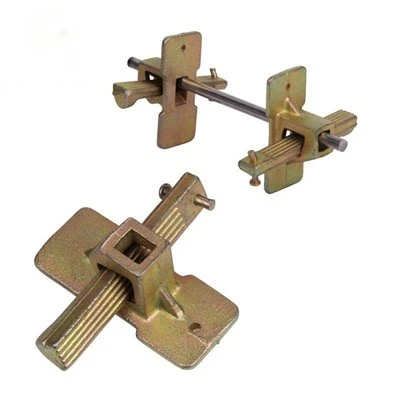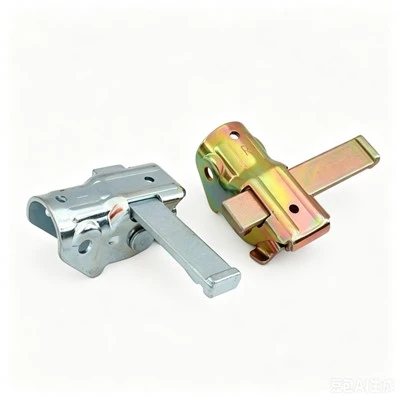


Our Formwork Anchor Nut

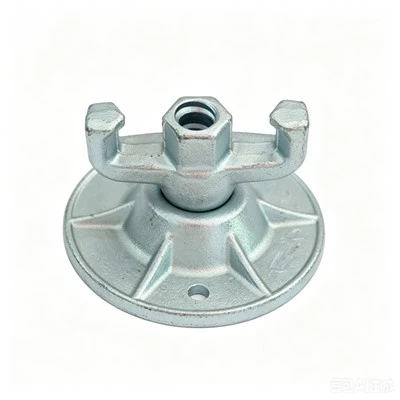
Tie rod wing nut
The formwork wing-style anchor nut comes with two wing lugs. During installation, pass the tie rod through the formwork panel. Slide the waler plate and then the wing nut onto the exposed end of the tie rod. Tighten manually by gripping the wing lugs, then double-check that the panels are firmly secured.
This fastener can also be adopted for other general tightening applications. Tie rod wing nuts are available in , D15-17 and D20 sizes to match different project requirements.

Formwork combi nut
Formwork combi nut, also known as combination wing nut, is a locking component for concrete formwork tie-rod systems. It consists of a wing nut and base plate connected by a pivot pin, allowing the nut to rotate on the base plate. Base plates are available in round and square styles.
During installation, the base plate sits tightly against the formwork panel to effectively prevent concrete leakage. It is easy to assemble and disassemble.
Manufactured in forged and cast versions, it fits formwork tie rods of DW15/17 , and DW20 sizes. It is widely used for wall, column and slab formwork projects.

Hex nuts
Hex nuts (also called Formtie hex nut,hex coupling nuts or hexagonal nuts) are applied in tie-rod systems within building formwork assemblies.
Two sizes are available: 30*50 mm and 30*100 mm. They can replace wing-style anchor nuts where working space is limited.
Wellfit manufactures hex nuts in two material options: steel and cast iron. Due to material differences, they fit distinct site conditions. Steel hex nuts work for high-load working environments, while cast-iron hex nuts are intended for light-load applications.

DW12 anchor nut
DW12 anchor nut is a cast iron threaded fastener for concrete formwork systems. It matches with 12 mm formwork tie rods to secure wall formwork, and convert concrete load evenly to formwork panels. Widely used in residential and commercial wall casting projects.

DW15/17 anchor nut
DW15/17 anchor nut is a heavy-duty fastener for concrete formwork and formwork shoring systems. It works with 15 mm / 17 mm formwork tie rods to form the wall fastening system and evenly distributes load pressure onto the formwork panels.

DW20 anchor nut
The DW20 anchor nut is a heavy-duty threaded fastener, generally manufactured from Q235 carbon steel or ductile iron. Designed for concrete formwork and shoring systems, it pairs with 20 mm-diameter tie rods and is applied in wall, column and bridge projects.
What is Formwork Anchor Nut
Formwork anchor nuts are essential fastener components for wall formwork systems, available in two‑wing and three‑wing types. The wings and round base plate are integrally manufactured as one single piece.
As key parts for concrete formwork assembly, their round base plate comes with a diameter ranging from 70‑130 mm, and custom dimensions are acceptable to meet project demands. A central hole is machined on the base plate. On‑site, the formwork tie rod goes through this hole. Working together with formwork walers, this fastener secures steel formwork panels tightly in position.


Central‑hole internal threads cover D12, D15/17 and D20, conforming to tolerance class 6H. Full‑profile, burr‑free threads guarantee smooth fitting with corresponding formwork tie rods.
These formwork anchor nuts are supplied in Q235 carbon steel, 45# steel and ductile iron. Based on production methods, they fall into forged and cast types.
The forged formwork anchor nut achieves a maximum load‑bearing capacity of 200 KN. With correct operation, it supports over 50 re‑uses. It withstands high lateral pressure generated during concrete pouring and stops formwork bulging and structural deformation.
Load Capacity Test of Formwork Anchor Nut

Formwork anchor nuts are critical load‑bearing accessories within the formwork system. Poor‑quality products may cause formwork bulging and bring potential construction risks. Wellfit conducts random sampling inspection for every batch of formwork anchor nuts. Load‑capacity tests are performed to simulate actual stress conditions of tie rods on‑site, ensuring construction safety at job sites.
Forged Formwork Anchor Nut: Ultimate failure load reaches 200 KN, ideal for projects with frequent turnover.
Cast Formwork Anchor Nut: It delivers lower load capacity compared with forged versions, with a maximum capacity of 160 KN. Suitable for small‑scale temporary formwork projects under low‑load conditions.
All test records are kept on file. Corresponding test reports can be provided upon your project‑specific request.
Cold‑rolled vs Hot‑rolled Formwork Tie Rods
Our D12, D15‑17 and D20 anchor nuts fit both cold‑rolled and hot‑rolled tie rods, while performance differs between the two production processes.
Cold‑rolled formwork tie rods are machined from round steel bars. They feature smooth threads and come with lower cost, ideal for general civil and commercial building projects.
Hot‑rolled formwork tie rods are deformed‑bar rebars with intermittent threads, also known as high‑load construction rebars. They deliver superior tensile strength and can withstand higher failure loads.
Please let us know your project working condition, we can recommend the proper tie rod‑and‑nut combination for you.
Formwork Tie‑Rod Nut System
These fastening nuts are key components for securing formwork panels on concrete tie‑rod systems.
Hex Nut
Wellfit manufactures hex nuts in two material options: steel and cast iron. Due to material differences, they fit distinct site conditions. Steel hex nuts work for high‑load working environments, while cast‑iron hex nuts are intended for light‑load applications.

Tie rod wing Nut
The formwork wing‑style anchor nut comes with two wing lugs. During installation, pass the tie rod through the formwork panel. Slide the waler plate and then the wing nut onto the exposed end of the tie rod. Tighten manually by gripping the wing lugs, then double‑check that the panels are firmly secured.
This fastener can also be adopted for other general tightening applications. Tie rod wing nuts are available in D12, D15‑17 and D20 sizes to match different project requirements.

Two‑wing VS Three‑wing Formwork Anchor Nut
As vital fastening components for wall formwork systems, formwork anchor nuts come in two‑wing and three‑wing versions.

two‑wing nut
The two‑wing nut features light weight. It allows easy hammering and disassembly in confined spaces, ideal for ordinary wall structures and low‑load projects.

three‑wing nut
The three‑wing nut uses more raw material and weighs heavier. With three force‑bearing points, it delivers even stress distribution and resists deformation and slipping. It is better suited for formwork system projects with repeated‑turnover requirements.
Application of Formwork Anchor Nuts
Wellfit's formwork anchor nuts fit a full range of formwork systems, including wall formwork, slab formwork, column formwork, beam formwork and timber formwork. Widely applied in various building wall construction projects, they can accommodate projects of different load levels by varying thread sizes, base‑plate dimensions, as well as forged or cast manufacturing processes. They are especially well‑matched for wall and column formwork systems.

Packing & Delivery


All formwork nuts are packed for safe overseas transit.
Packaging: Normally packed in woven bags or in wooden cases. Custom‑made packing is available upon your request.
Lead Time: Production time varies based on order volume; sample orders have shorter turnaround.
Shipment Port: Goods are delivered from Qingdao Port.
Share your project requirements with us, and we will confirm accurate delivery schedule for you.
Related Products
-
Formwork tie rods
-
Walers
-
Formwork panels
-
Clamps
-
Water Stopper
-
Steel Cone
-
Washer Plate
Wellfit produces various formwork and formwork accessories. If you have any questions about our formwork anchor nuts, do not hesitate to get in touch with us.
Hot Tags: Formwork Anchor Nut Wing Nut, China Formwork Anchor Nut Wing Nut manufacturers, suppliers, factory, 110mm Forged Formwork Anchor Nut, Push Pull Prop, Forged T Head Formwork Tie Rod, formwork accessory, Formwork Panel Clamp, P Type Formwok Clamp